
Author: Paramount Looms Technical Team Reading Time: 8–10 Minutes
Introduction
The textile industry is constantly evolving, and manufacturers are always looking for faster, more efficient, and cost-effective weaving solutions. One of the most popular technologies used for producing synthetic fabrics is the Water Jet Loom.
If you are planning to start a weaving business or upgrade your existing factory, understanding how a Water Jet Loom works is the first step toward making the right investment.
In this beginner’s guide, we explain everything you need to know—from the working principle and machine components to advantages, limitations, applications, and tips for choosing the right loom.
What is a Water Jet Loom?
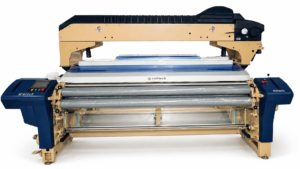
A Water Jet Loom is a high-speed weaving machine that uses a fine jet of water to carry the weft yarn through the shed formed by the warp yarns.
Unlike traditional shuttle looms, which physically carry the yarn across the fabric, a Water Jet Loom uses water pressure for weft insertion. This allows the machine to operate at high speeds with smooth yarn movement and lower mechanical wear.
Water Jet Looms are best suited for hydrophobic filament yarns, such as polyester and nylon, which are not affected by water during weaving.
How Does a Water Jet Loom Work?
The weaving process follows these basic steps:
- The warp yarns are separated to create a shed.
- A high-pressure pump sends clean water to the main nozzle.
- The water jet carries the weft yarn across the shed.
- The reed beats the inserted yarn into place.
- The fabric is wound onto the cloth roller.
- The process repeats continuously at high speed.
This sequence allows Water Jet Looms to produce fabric efficiently while maintaining consistent quality.
Main Components of a Water Jet Loom
A modern Water Jet Loom consists of several important parts:
- Machine frame
- Warp beam
- Main nozzle
- Water pump
- Electronic control system
- Beating
- Heald frames
- Shedding like Plain, Cam, Dobby, Electronic Jacquard
- Take-up mechanism
- Let-off mechanism
- Cloth roller
Each component plays a vital role in ensuring stable operation and high-quality fabric production.
Which Fabrics Can Be Produced?
Water Jet Looms are ideal for weaving synthetic filament fabrics, including:
- Polyester fabrics
- Nylon fabrics
- Taffeta
- Lining fabric
- Umbrella fabric
- Bag fabric
- Lightweight garment fabrics
- Home textile fabrics
Natural fibers such as cotton, wool, and spun yarns are generally not suitable because they absorb water.
Advantages of a Water Jet Loom
High Production Speed
Water Jet Looms operate at high speeds, allowing manufacturers to increase daily fabric output.
Lower Energy Consumption
With fewer moving parts than conventional looms, they generally consume less mechanical energy for weft insertion.
Smooth Operation
Water provides stable weft insertion, helping to reduce yarn stress and improve running performance.
Lower Maintenance
The simpler weft insertion mechanism means fewer parts are subject to wear.
Good Fabric Quality
Uniform weft insertion contributes to consistent fabric appearance and quality.
Cost-Effective Production
For suitable synthetic fabrics, Water Jet Looms can offer an attractive balance of productivity and operating cost.
Limitations of Water Jet Looms
Although highly efficient, Water Jet Looms are not suitable for every application.
Some limitations include:
- Best suited for synthetic filament yarns.
- Require a reliable supply of clean low TDS water.
- Water treatment and drainage systems should be planned call ETP.
- Proper humidity and machine maintenance remain important.
Choosing the right loom depends on the type of fabric you intend to produce.
Industries That Use Water Jet Looms
Water Jet Looms are widely used in industries producing:
- Fashion fabrics
- Lining materials
- Sportswear textiles
- Bags and luggage fabrics
- Rainwear
- Umbrellas
- Home furnishings
- Industrial synthetic fabrics
Why Water Quality Matters
The quality of water directly affects machine performance.
Using clean, filtered water can help:
- Maintain stable nozzle performance
- Reduce clogging
- Improve weaving consistency
- Extend the life of pumps and valves
Regular inspection of the water filtration system is recommended.
Daily Maintenance Tips
To keep your Water Jet Loom running efficiently:
- Inspect nozzles for blockage.
- Check water pressure.
- Verify lubrication points.
- Remove lint and dirt.
- Monitor pump operation.
- Check fabric quality during production.
- Ensure all safety devices function correctly.
- follow preventive maintenance before new beam getting
Preventive maintenance helps reduce downtime and improves machine reliability.
Is a Water Jet Loom Right for You?
A Water Jet Loom is an excellent choice if you:
- Produce polyester or nylon fabrics.
- Want high-speed production.
- Need consistent fabric quality.
- To produce defect less fabrics
- Plan to reduce production costs over time.
- Want to increase manufacturing efficiency.
For cotton or other water-absorbing yarns, another weaving technology may be more suitable.
Why Choose Paramount Looms?
At Paramount Looms, we focus on delivering modern weaving solutions designed for productivity, durability, and dependable after-sales support.
Our engineering team works continuously to improve machine performance so customers can achieve efficient production while maintaining fabric quality.
Whether you are setting up your first weaving unit or expanding an existing factory, selecting the right machine and maintaining it properly are key steps toward long-term success.
Frequently Asked Questions
What is the main advantage of a Water Jet Loom?
High-speed weaving of suitable synthetic filament fabrics with efficient weft insertion gives high production of fabrics.
Can a Water Jet Loom weave cotton fabric?
Water Jet Looms are generally intended for hydrophobic filament yarns such as polyester and nylon rather than absorbent fibers like cotton.
Does a Water Jet Loom require clean water?
Yes. Clean, filtered water low TDS helps ensure stable machine performance and reduces maintenance.
Is a Water Jet Loom suitable for beginners?
Yes. With proper training, installation, and maintenance, it can be an effective choice for entrepreneurs entering synthetic fabric manufacturing.
What fabrics are commonly produced?
Polyester, nylon, taffeta, lining fabrics, umbrella fabrics, and other synthetic filament textiles.
Conclusion
Water Jet Looms have become one of the most efficient weaving technologies for producing synthetic filament fabrics. Their high production speed, smooth weft insertion, and reliable performance make them a popular choice for modern weaving units.
If you are planning to invest in weaving machinery, understanding how a Water Jet Loom works and where it performs best will help you make an informed decision. Selecting the right machine, maintaining it properly, and using appropriate yarns are the foundations of a successful and profitable weaving operation.